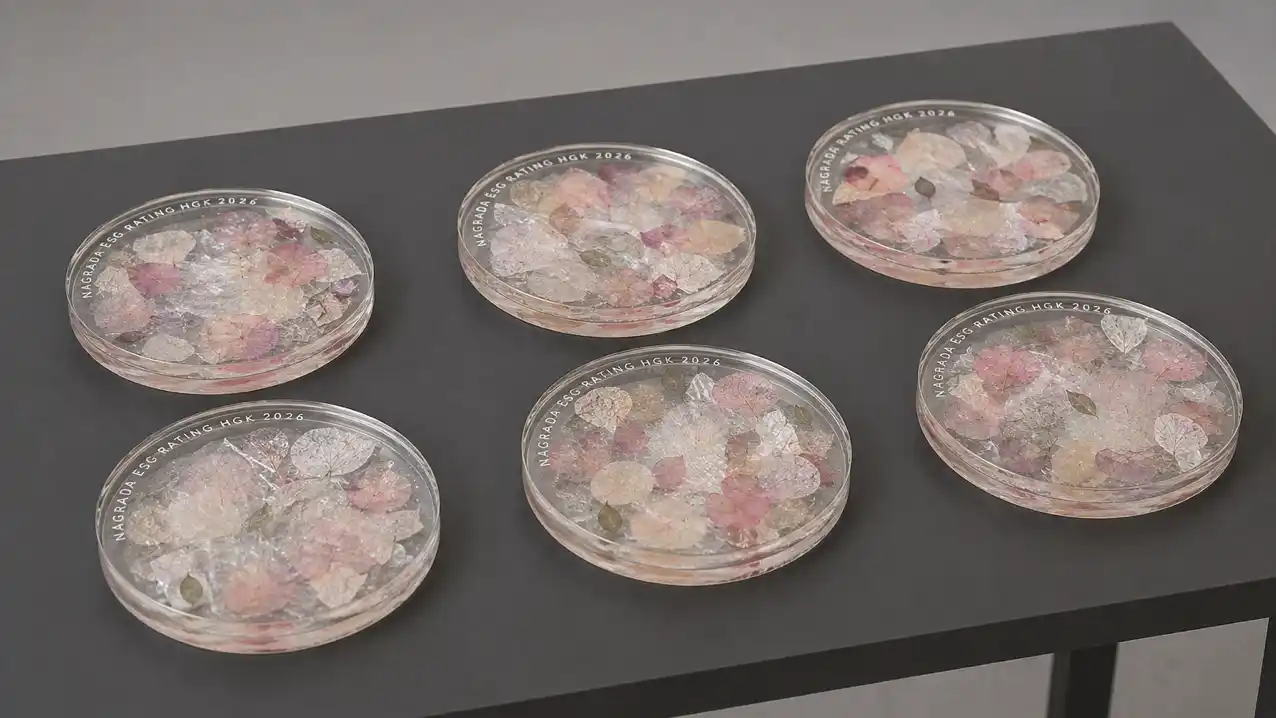
HGK ESG RATING – 2026.
Objavljeno: 26. 03. 2026.
As part of the Support Sustainability 2026 conference, the Croatian Chamber of Economy continues to recognize and reward companies that set standards of sustainability in Croatia through their business practices. The HGK ESG Awards are presented for outstanding achievements in environmental, social, and governance practices, with the aim of highlighting organizations that view sustainability not as an obligation, but as an opportunity for long-term growth and competitiveness.
Following successful previous editions that recognized leading Croatian companies and institutions, and through the well-established HGK ESG rating categories, this year’s awards will once again highlight the best examples of sustainable business practices and innovative models that contribute to a more resilient and responsible economy.
We invite companies and organizations to take part in the new ESG assessment cycle and demonstrate how sustainability can act as a driver of change and the creation of new value—for businesses, society, and future generations.
ESG Rating Award 2026. – Layers of Change
The 2026 award was conceived as an artistic object that, through the very process of its creation, conveys the ideas of sustainability, transformation, and the interconnectedness of the materials we use every day. Its creator, artist Silvio Vujičić, starts from the idea that natural and man-made materials are not necessarily two separate worlds, but rather parts of the same cycle. For this reason, the work incorporates flower petals from a herbarium, carefully dried and prepared, together with fragments of paper, plastic, and carbon. The materials were shaped into organic forms, arranged in layers between circular glass panels, and then laminated into a single piece whose appearance evokes a Petri dish.
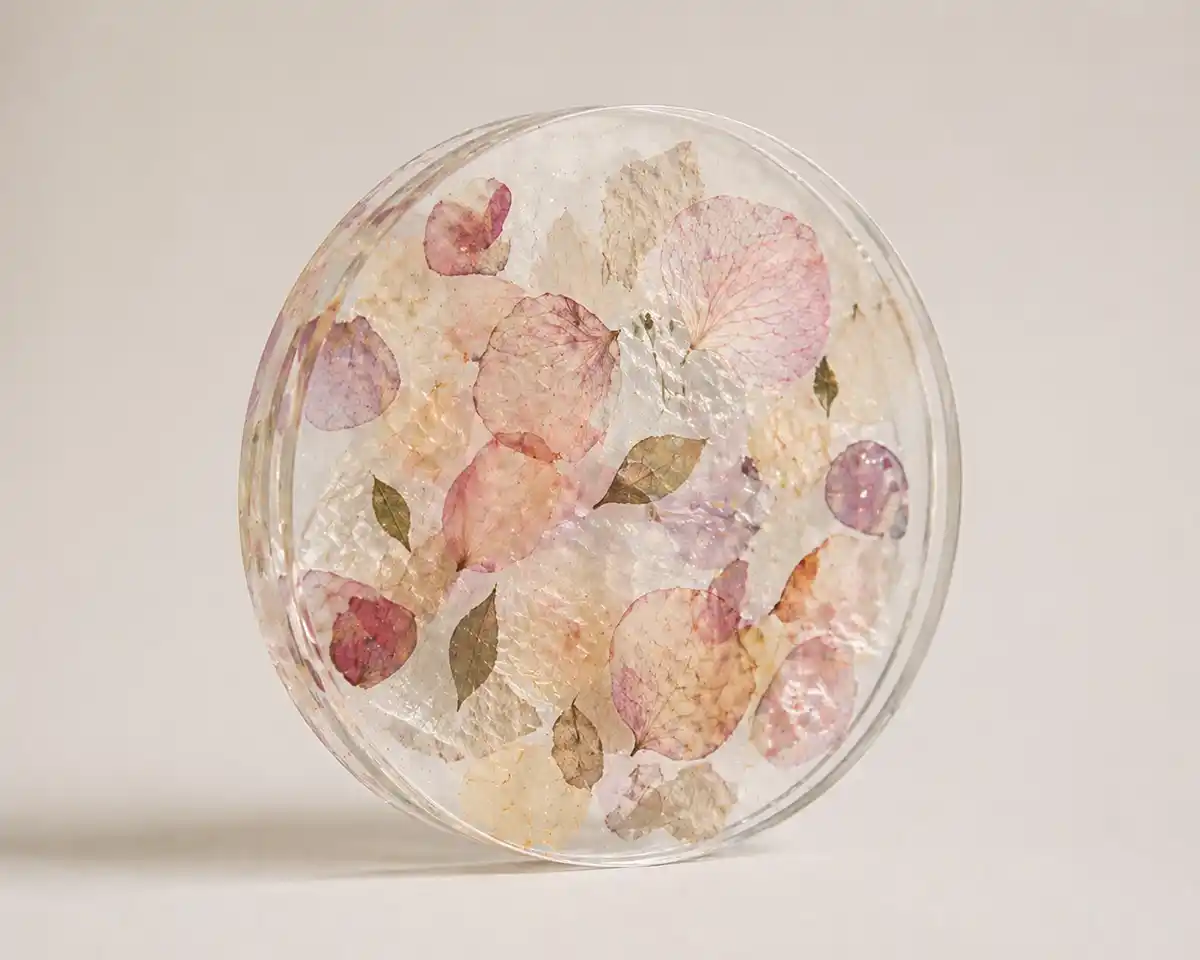
At first glance, the selected materials seem entirely different, yet they are connected by a shared origin and by processes of transformation. Paper comes from plants, carbon from former plant life, while plastic is derived from petroleum, whose origins are likewise linked to the organic remains of living organisms.
In the final form, natural and “artificial” elements are present on equal terms and intertwined without a clear boundary between them. This layered structure carries the central message of the award: sustainability is not only a matter of choosing one material over another, but of understanding the systems and cycles through which materials are created, transformed, used, and ultimately returned to the process.
Visually delicate and organic, the award also carries a more complex idea. Rather than dividing materials simply into “good” and “bad,” it proposes a view in which all materials are part of the same system — one that needs to be used more carefully, returned, and continuously reconsidered.
The production process was also documented in a short video, allowing the making of the award itself to become part of its story.